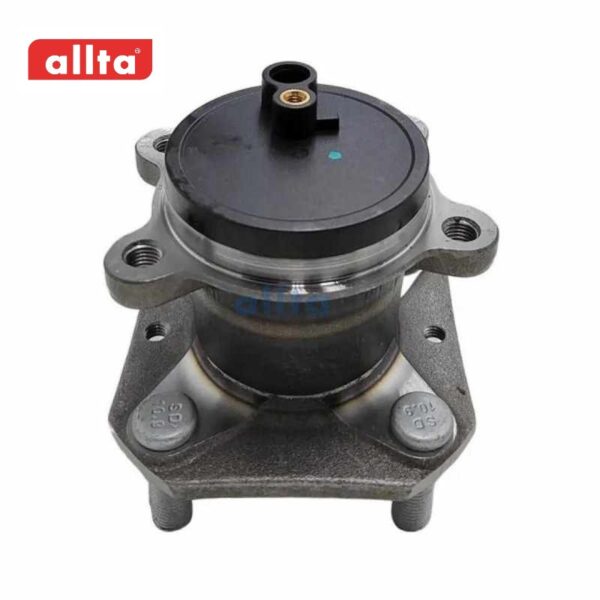



Choosing the correct wheel hub bearing is an important part of automotive parts purchasing. Although two wheel hub assemblies may look similar, differences in dimensions, ABS systems, bolt patterns, installation positions and vehicle configurations can make them incompatible.
For automotive parts wholesalers, distributors and repair shops, checking the OE number is usually the fastest and most reliable way to identify the correct wheel hub bearing.
In this guide, we explain what an OE number is, where to find it and what information buyers should provide before ordering a replacement wheel hub bearing or wheel hub assembly.
What Is a Wheel Hub Bearing OE Number?
An OE number, also called an OEM number or original equipment number, is the reference number assigned to an automotive component by the vehicle manufacturer.
Examples of wheel hub bearing OE numbers include:
- 42450-02080
- 43550-33020
- 1K0498621
- 42200-TLA-A51
- A1673340300
The format varies between vehicle manufacturers. Toyota numbers often contain five digits, a hyphen and another five digits, while Volkswagen and Mercedes-Benz use different numbering systems.
The OE number helps suppliers identify the original specifications of the part, including its application, dimensions and installation position.
Why Is the OE Number Important?
Searching only by vehicle model is not always enough.
The same vehicle model may use different wheel hub bearings depending on:
- Production year
- Engine version
- Front-wheel drive or four-wheel drive
- Front or rear axle
- Left or right installation position
- ABS sensor configuration
- Number of wheel bolts
- Vehicle market or production region
For example, a vehicle produced in different years may use wheel hub assemblies with different flange sizes or ABS magnetic encoder specifications.
Using the OE number reduces the risk of selecting a part that looks similar but cannot be installed correctly.
Where Can You Find the OE Number?
There are several common ways to find the original wheel hub bearing number.
1. Check the Original Part
The OE number may be printed, engraved or laser-marked on the original wheel hub assembly.
Before removing the old part, clean the surface and check the flange, bearing body and rear cover carefully.
However, numbers on old components may be difficult to read because of rust, grease or wear.
2. Check the Vehicle Parts Catalog
Professional parts catalogs can identify the original wheel hub bearing using the vehicle identification number, commonly known as the VIN.
The VIN can help confirm:
- Vehicle model
- Production date
- Engine type
- Drive system
- Original equipment configuration
For difficult applications, VIN-based verification is often more reliable than checking the model name alone.
3. Check the Product Packaging or Previous Invoice
If the customer has purchased the same wheel hub bearing before, the OE number may appear on:
- The original packaging
- Product labels
- Purchase invoices
- Warehouse records
- Supplier quotations
A clear photo of the label can help the supplier identify the product quickly.
4. Provide a Photo of the Original Part
When the OE number is unavailable, buyers can send clear photos of the old wheel hub assembly.
Useful photos should show:
- Front flange
- Rear side
- ABS connector
- Bolt holes
- Stud arrangement
- Bearing body
- Any visible numbers or markings
Photos are helpful, but dimensions and vehicle information should also be provided because different products can have very similar appearances.
What Information Should Buyers Provide?
To confirm the correct wheel hub bearing, provide as much of the following information as possible:
OE Number
Send the complete OE number exactly as it appears on the original part or catalog.
Do not remove letters, spaces or hyphens, because even a small difference may indicate another application.
Vehicle Make and Model
For example:
- Toyota Corolla
- Honda CR-V
- Nissan X-Trail
- Volkswagen Golf
- Mercedes-Benz GLE
Production Year
The production year is important because vehicle manufacturers may change bearing specifications during a model generation.
Installation Position
Confirm whether the product is for the:
- Front axle
- Rear axle
- Front left
- Front right
- Rear left
- Rear right
Many wheel hub assemblies can be installed on both sides, but some applications are side-specific.
Drive Type
Specify whether the vehicle is:
- 2WD
- Front-wheel drive
- Rear-wheel drive
- AWD
- 4WD
A two-wheel-drive model and a four-wheel-drive model may use different rear wheel hub assemblies.
ABS Information
Confirm whether the wheel hub bearing includes:
- An ABS magnetic encoder
- An ABS sensor
- An ABS cable
- No ABS function
Incorrect ABS specifications may cause warning lights or signal problems after installation.
Quantity and Target Market
Wholesale buyers should also provide the required quantity and destination market.
This helps the supplier check:
- Stock availability
- Packaging options
- Shipping method
- Delivery time
- Market-specific vehicle applications
What Is a Cross-Reference Number?
One wheel hub bearing may have several reference numbers.
These can include:
- Vehicle manufacturer OE numbers
- Bearing manufacturer numbers
- Aftermarket brand numbers
- Distributor catalog numbers
- Superseded OE numbers
For example, an older OE number may have been replaced by a newer number, while both numbers refer to the same application.
Cross-reference numbers are useful, but they should not be treated as the only confirmation method. Buyers should still check the vehicle, year, installation position and technical specifications.
Common Wheel Hub Bearing Ordering Mistakes
Ordering by Appearance Only
Two wheel hub assemblies can look almost identical but have different:
- Bolt-circle diameters
- Flange offsets
- Spline counts
- Sensor configurations
- Bearing dimensions
Appearance alone is not enough to confirm compatibility.
Ignoring the Drive Configuration
Some vehicles use different wheel hub assemblies for 2WD and 4WD versions.
Always confirm the drive type before placing an order.
Confusing Front and Rear Positions
The front and rear wheel hub bearings normally have different structures and dimensions.
The installation position should be clearly stated in every inquiry.
Providing an Incomplete OE Number
Missing one letter or digit can lead to an incorrect product match.
Send a photo of the original number whenever possible.
Relying Only on the Vehicle Name
Vehicle names and specifications can differ between countries.
Providing the production year, engine information, VIN or OE number improves identification accuracy.
How to Check a Wheel Hub Bearing Before Shipment
Before confirming a wholesale order, buyers can request the supplier to check:
- OE number and cross-reference numbers
- Vehicle application
- Front or rear installation position
- Product dimensions
- ABS configuration
- Bolt and stud arrangement
- Packaging label
- Order quantity
- Carton quantity
For large or customized orders, confirming a product photo or sample before mass shipment can further reduce purchasing risk.
Why Accurate Fitment Matters
Installing the wrong wheel hub bearing may cause:
- Installation difficulties
- Abnormal wheel noise
- ABS warning lights
- Incorrect wheel alignment
- Excessive vibration
- Premature bearing failure
- Customer complaints and warranty claims
Accurate product identification protects both the buyer and the end customer.
For distributors, correct fitment information also helps reduce returns, warehouse mistakes and unnecessary shipping costs.
How ALLTA Supports OE Number Matching
ALLTA supplies automotive wheel hub bearings and wheel hub assemblies for a wide range of Japanese, Korean, European, American and Chinese vehicle applications.
Buyers can send the following information for product confirmation:
- OE number
- Cross-reference number
- Vehicle make and model
- Production year
- Front or rear position
- 2WD or 4WD configuration
- Required quantity
- Photo of the original part
Our team will check the available product information and recommend the corresponding wheel hub bearing for your application.
Neutral packaging, ALLTA branded packaging and customized packaging solutions can be discussed according to order requirements.
Frequently Asked Questions
Can I identify a wheel hub bearing using only the vehicle model?
Sometimes, but it is not recommended. The same vehicle model may use different wheel hub bearings depending on the year, drive type, axle position and ABS configuration.
Is an aftermarket reference number the same as an OE number?
Not always. An aftermarket number is normally assigned by a bearing manufacturer, distributor or parts brand. It may cross-reference one or more OE numbers.
What should I do if the OE number is unreadable?
Send clear photos of the original wheel hub assembly together with the vehicle make, model, year, installation position and drive type. Measuring the product dimensions may also be necessary.
Can one wheel hub bearing have several OE numbers?
Yes. One product may correspond to several OE numbers because of number supersession, different market references or shared vehicle platforms.
What information is required for a wholesale quotation?
Provide the OE number, vehicle application, required quantity, destination country and packaging requirements. This allows the supplier to prepare a more accurate quotation.
Conclusion
The OE number is one of the most useful tools for finding the correct wheel hub bearing, but it should be checked together with vehicle information, installation position, drive configuration and ABS specifications.
Providing complete information before ordering helps reduce incorrect shipments, product returns and aftermarket warranty claims.
For wheel hub bearing identification or wholesale inquiries, send us your OE number, vehicle details, quantity and product photo.
Contact ALLTA for Wheel Hub Bearing Matching
WhatsApp / Tel: +86 137 1009 8090
Please include:
- OE number
- Vehicle model and year
- Front or rear position
- 2WD or 4WD
- Required quantity
- Destination country